

Want to Age in Place? Start Planning While You're Still Active
Somewhere in your late fifties or early sixties, a quiet thought shows up.
You're standing in the kitchen you've stood in for twenty years, and it occurs to you that you'd like to still be standing in it at eighty. Not in a facility. Not in your daughter's spare room. Here.
That thought has a name. It's called aging in place, and it's one of the most common wishes older adults have. It's also one of the most achievable, as long as you don't wait until you desperately need it to start.
If you want to age in place, the single biggest thing in your favor is time. The years you have right now, while you're still active, to get ahead of it.
That head start is everything, so let's talk about how to use it.

What percentage of seniors want to age in place?
Just about all of them. Depending on which survey you read, somewhere between 75 and 90 percent of people over 65 say they want to stay in their own home as long as they can.
So if that's you, you're not being stubborn or sentimental. You're in the large and sensible majority.
Here's the part the surveys don't put in the headline, though. Wanting to stay isn't the same as being able to. The people who actually pull it off tend to have one thing in common, and it isn't money or a perfect house. It's that they started early, while they were still healthy enough that none of it felt urgent.
That's really what this article is about. Not turning your home into a hospital. Just a handful of smart, unhurried moves you can make now, so that "I want to stay here" quietly becomes "I can."
What Aging in Place Actually Means
Aging in place just means growing older in your own home instead of moving into assisted living, a nursing home, or a relative's house.
That's it. No special program to sign up for, no box to check. If you're living in your own place and planning to keep it that way, you're aging in place, or at least intending to.
The catch is that most homes weren't built with an older version of you in mind. The stairs you jog up today, the tub you step into without a thought or the laundry you haul down to the basement. None of it was designed for the day your knees or your balance stop cooperating.
Done in a panic after a fall, closing that gap is stressful and expensive. Done a little at a time while you're healthy, it's almost invisible. You end up at the same destination but take very different journeys.
Why Staying Home Is Worth It
The pull toward home is more than habit. It has real substance, and it's what makes all the planning worth it.
- It's where your history lives. The marks on the doorframe, the neighbor who knows your name, the coffee shop that knows your order. That familiarity isn't just pleasant. A known home is easier and safer to move through than a new place.
- It keeps you in charge. Moving into a facility means someone else's schedule, menu, and rules. Staying home says something different: I'll accept help when I need it, but I'm still running the show.
- It's usually cheaper. More on that below, but staying put generally costs far less than the alternatives.
Those are the reasons to plan ahead. So here's what the planning actually involves.
What You're Actually Planning For
Before we go further, here's the whole plan upfront. Aging in place comes down to getting ahead of five things, listed here in order of importance:
- Your health. The strong, mobile body that lets you stay independent in the first place.
- Your finances. The breathing room that keeps you in the house instead of forcing a move.
- Your home. A few small, cheap changes that make it safe for the years ahead.
- Your people. Staying connected, so independence never turns into isolation.
- Your backup plan. Knowing what you'd do if your needs change, so a crisis never decides for you.
Notice that only one of those five is about the house. That surprises people. If you do nothing else, start at the top and work down.
1. Your Health Comes First
Here's the thing most articles get backward. They send you straight to the hardware store for grab bars. But the best aging-in-place investment isn't a gadget. It's the body that lets you skip the gadget in the first place.

The people who stay in their homes longest are, more than anything, the ones who stayed mobile. So before you touch the house, tend to the person living in it. A few things matter most:
- Keep your legs strong. Strong legs get you off the couch, up the stairs, and off the floor. If you can stand up from a chair without using your hands, keep it that way.
- Keep moving. A daily walk does more for your independence than almost anything you can buy. Staying in motion helps to retain mobility in your joints.
- Watch your weight. Extra pounds make everything harder on your knees, your balance, and your energy to move every day. They also have an effect on conditions such as diabetes, high blood pressure, and heart trouble. You don't need a crash diet. Just eat sensible meals to keep your weight and health conditions under control, as it's a big part of aging on your own terms.
- Get your eyes checked. A surprising amount of "unsteadiness" is really just an old prescription, which is an easy fix with great rewards.
- Look after your hearing. It matters more than people think. It's how you hear the doorbell, the smoke alarm, a car coming, or someone calling your name. Straining to hear can affect your overall balance, so get it checked and wear your hearing aids if prescribed.
- Keep your mind sharp. Staying home means staying in charge of your own days, your bills, your appointments, and your decisions. That takes a mind you keep exercising.
Keep your body steady and your mind sharp, and you may never need half the modifications the other articles want to sell you.
None of this replaces regular checkups. A good relationship with your doctor, and keeping up with your yearly visits, helps you catch small things before they become big ones. Think of it as the maintenance plan for the one thing you can't replace.
These two articles are worth a read, as they are about a strong body and sharp mind:
>>Related: Balance Problems in Older Adults
>>Related: Brain Games for Seniors
2. Your Finances
This isn't a finance article, and I won't pretend to be your advisor. But you can't talk honestly about aging in place without talking about money.
Money usually isn't what forces someone out of their home. It's a health change, a fall, a diagnosis, or a body that needs more help than the house can give.
Money is what decides how well you can respond when that day comes. Whether you can afford the help, the changes, or the care that lets you stay put a while longer. Health sets the timeline. Money sets your options.
The good news is that the moves that matter are ones you can start on now, while you're still working. The earlier you start, the less any of it hurts.
- Walk into retirement without a mortgage or car payment if you possibly can. These are the two big monthly bills most likely to squeeze a fixed income until something has to give, and what gives is often the house.
- Build a cushion for home repairs. The roof, the furnace, and the water heater don't care how old you are. A house you plan to keep for decades will need real money spent on it, and a repair fund keeps a surprise from becoming a crisis.
- Know what Medicare won't pay for. This one catches people hard. It doesn't cover home modifications or the everyday help many people picture, like bathing, dressing, meals, and housekeeping. Plan as though that cost is yours.
- Budget for the possibility of paid help. You may not need it for years, or ever. But a few hours a week of help down the road is a lot cheaper than a facility, and planning for it beats being blindsided.
- Start early and spread it out. Almost none of this has to happen at once. The person who plans over ten years barely feels it. The person who scrambles after a fall feels all of it.
You don't need to be wealthy to age in place. You need breathing room. Financial stress has a nasty way of aging you faster, wrecking your sleep and your health, which is the exact opposite of what you're after. Fewer big worries hanging over you means more of your energy goes to living well.
3. Your Home: Small Changes, Not Big Renovations
Now we get to the home itself, and here's the reassuring news: the changes that matter most are small, cheap, and invisible to guests. You are not building a hospital wing.

The expensive, dramatic stuff, like stair lifts, walk-in tubs, wheelchair ramps, and gutted bathrooms, is exactly what you're trying to plan your way out of needing. It costs thousands and usually gets installed in a hurry after something goes wrong. Your job now is to make that unnecessary for as long as possible.
Here's where the small amount of money goes, and why each one earns its place.
✧ Lever Door Handles
Round doorknobs are quietly hostile to arthritic hands. Levers you can open with an elbow, a wrist, or a full grocery bag on each arm.
They cost a few dollars each, swap out in ten minutes with a screwdriver, and nobody who visits will ever notice. It's the smallest change on this list and one of the first worth making, precisely because it's so easy there's no excuse to put it off.
✧ Better Lighting & Motion-Sensor Nightlights
A huge share of falls happen for the dullest reason imaginable: someone couldn't see. A dim hallway, a dark stairwell, or a midnight trip to the bathroom.
Brighter bulbs throughout the house cost almost nothing. But the real hero is the motion-sensor nightlight, the kind that clicks on by itself when you pad down the hall at 2 a.m. You never fumble for a switch, and you never cross a dark room. Plug a few into the bathrooms, halls, and bedroom, and forget about them.
✧ A Non-Slip Bath Mat
The bathroom is the single most dangerous room in the house, and wet tile is the reason. This is the cheapest safety upgrade you can buy.
A good suction-cup mat that actually grips the tub floor takes the most fall-prone surface in your home and makes it far less so, for the price of a pizza. There's no reason to wait on this one.
✧ A Grab Bar That Doesn't Look Like One
Grab bars have an image problem. People picture the cold institutional chrome and refuse them for years, right up until they'd have given anything for one.
Here's the fix: they don't look like that anymore. You can buy grab bars that double as towel bars or shelves, finished to match your bathroom, that a guest would never spot as safety equipment. Mounted properly into the wall studs by the tub and toilet, one turns the room's worst moment, which is that wobble stepping out of the shower, into a non-event. Get the handsome kind, and you'll never mind looking at it.
✧ A Sturdy Step Stool With a Handle
You're not going to stop reaching the top shelf, so make it safe. A wobbly folding stool or, heaven help us, a kitchen chair is how capable people end up on the floor.
A proper step stool with a tall grab handle lets you reach what you need with something solid to hold. Keep it in the kitchen, use it instead of improvising, and you've closed off one of the most common household falls without giving up an inch of independence.
A Few More Worth Knowing About
Those five are where I'd start. A handful of others are worth a look as your needs and budget allow, leaning more toward convenience and peace of mind than daily safety:
- A video doorbell lets you see who's at the door without hurrying to it or opening it to a stranger, which is both safer and a small guard against scams that target older adults.
- A reacher-grabber tool reduces risky bending for dropped keys and high shelves.
- Brighter LED fixtures in the rooms you use most make everything easier on aging eyes.
- A medical alert device is worth considering down the line, especially for anyone living alone, though most active sixty-somethings aren't there yet.
The pattern through it all is the same: start with the cheap, easy, invisible things now, and let the bigger stuff wait until, and if, you actually need it.
4. Your People
Here's the piece that's easiest to skip and the one most likely to undo an otherwise good plan.
You can have strong legs, sound finances, and a perfectly outfitted house, and still struggle if you end up alone in it. Staying independent was never supposed to mean staying by yourself.

So build the social side into your plan the same way you build in the grab bars:
- Keep a reason to leave the house. A class, a club, a standing coffee date, or a volunteer shift. Something on the calendar that expects you.
- Stay close to a few people who'd notice. Neighbors, friends, family who would know if something seemed off. Proximity matters more as the years go on.
- Use the tech that keeps you in touch. A video call with the grandkids costs nothing and does real good. So does a simple check-in routine with someone you trust.
A plan that keeps you safe but lonely isn't a good plan. Keep the people in it.
5. Your Backup Plan
Here's the part nobody enjoys thinking about, and exactly why it belongs in an honest article: sometimes staying home doesn't work out, no matter how well you planned.
A serious diagnosis like Alzheimer's, a stroke, or a level of care the house just can't provide can change the math overnight. That's not a failure of your plan. It's life, and the people who handle it best are simply the ones who thought about it before they had to.
So spend a little time now, while it's calm, getting a few things in place:
- Know your options. Assisted living, a smaller one-level home, moving closer to family, a continuing-care community. You don't have to choose anything today. Just be aware of your choices, so none of it comes as a surprise if the day arrives.
- Have the conversation early. Tell the people close to you what you'd want, and what you wouldn't, while you can still say it clearly. Where you'd want to live if home stops working, what kind of care you'd accept, or even your wishes for a funeral. It's a gift to them as much as to you, because it spares your family from guessing under pressure.
- Get your documents in order. A will, a power of attorney, and a health care directive. Boring, one-time paperwork that quietly saves everyone enormous stress later.
- Have a way to call for help. Especially if you live alone. A medical alert device you wear, or even a simple daily check-in with a neighbor or family member, means a fall or a bad moment never leaves you stranded and out of reach. It's a small thing that buys a lot of peace of mind.
None of this means giving up on staying home. It means that whatever happens, you are still the one making the decisions. That's what being prepared really buys you: control, right to the end.
The Honest Challenges, and How People Get Past Them
No fair article only sells the dream. Aging in place has real challenges. The good news is that each one has a way through, especially if you saw it coming.
- Isolation is the big one. When getting out gets harder, people go out less and slowly go quiet, and loneliness is genuinely bad for your health. This is exactly why the "your people" part of the plan matters as much as the grab bars. If you handle it early, it's very manageable.
- The upkeep doesn't shrink. The house doesn't get smaller as your energy for cleaning and maintaining it does. The way through is honest budgeting (that repair cushion) and a willingness to hand off the big chores. Pay someone for the yard work, the gutters, and the deep cleaning before they become a burden.
- The "waited too long" trap. The single most common mistake is doing nothing until a crisis forces the decision from a hospital bed instead of your kitchen table. The entire point of starting now is to never be in that spot. If you're reading this, you're already ahead of it.
None of these are reasons not to age in place. They're reasons to do it with your eyes open, which is exactly what you're doing.
Is It Cheaper Than Assisted Living?
Short answer: for most people, staying home costs less, often a lot less.
Assisted living runs into the thousands of dollars every month, indefinitely. The changes in this article run from a few dollars to a few hundred, once. Even if you eventually pay for some in-home help, you're often still coming out well ahead of a facility's monthly bill.
It depends on how much hands-on care you will end up needing. Round-the-clock personal care at home can get expensive. But in the years when you will mostly need a safe, well-set-up home and the occasional helping hand, a home costs less and adds more comfort.

Frequently Asked Questions
1. Does Medicare cover aging in place?
Mostly, no, and this trips a lot of people up. It covers medical care, not custodial care, so it won't pay for home modifications like grab bars or ramps, or for everyday help with bathing, dressing, meals, or housekeeping. It may cover short-term skilled care at home after an illness or surgery, but not the ongoing day-to-day support needed to age in place.
2. What are the disadvantages of aging in place?
The real disadvantages come from what a facility would otherwise handle for you. A facility keeps residents from getting lonely, handles maintenance, and notices when someone is slipping. At home, those quietly become your jobs. Ignore them, and they become the classic pitfalls: isolation, a house that outgrows your energy, and a crisis you didn't see coming. Prepare for them, and they stay manageable. The biggest disadvantage isn't staying home. It's staying home without a plan.
3. What do you actually need to age in place?
Less than the scary articles suggest. Starting with what matters most: a body kept as strong and mobile as possible, finances with enough breathing room, a home with a few small safety updates, a plan for staying socially connected, and someone you can call when you need a hand. Notice that only one of those five is about the house.
4. Is aging in place better than assisted living?
It's not better or worse. It's a personal fit. Home offers familiarity, independence, and usually lower cost. Assisted living offers built-in help, social contact, and no maintenance. The right answer depends on your health, your finances, and how much support you have around you. Starting your planning early simply keeps the choice in your hands instead of someone else's.
Final Thoughts
If you want to age in place, know that it isn't something that happens to the lucky ones. It's something people quietly set themselves up for, years in advance, one small decision at a time.
Here's the sneaky part. When you're active and feeling fine, the future feels far off, and it's easy to assume there's plenty of time. But that "someday" suddenly shows up, and you feel you have to catch up quickly.
You don't have to do any of it today. But you can do a little. Take a walk. Book the eye exam. Swap one doorknob. Plug in a nightlight. Each small move makes the next one easier, and together they're what turn "I hope I can stay here" into "I'm staying right here."
The goal was never a perfect, hazard-proofed house. It's keeping the freedom to live where you want, on your own terms, for as long as you possibly can.
Not sure where to start? Take a look at the suggestions below.
Recommended Products
As an Amazon Associate, I earn from qualifying purchases.
| GOBEKOR 6 Pack Passage Lever Door Handle | |
 |
Brushed nickel wave door levers. Interior door handles for closet keyless indoor door locks. |
| WILLED Motion Sensor Stair Lights Indoor | |
 |
Rechargeable magnetic night light. Mini wireless soft white hallway light, 3-in-1 charging cable for stairway. |
| SlipX Solutions 31"x15" Weighted Non Slip Bath Mat | |
 |
No suction cup design. Safe for refinished bathtubs & showers. Doesn't float and stays put on tile. |
| JOTPE Upgraded Grab Bars for Shower | |
 |
No-drill suction shower handles. Black heavy-duty grab bars for bathtub or toilet. |
| Aliseniors Step Stool with Handle | |
 |
Two steps for high bed, bathtub, or truck. Handles 400 lbs. Black heavy-duty non-skid platform with adjustable handle. |
Balance Problems in Older Adults: Why They Happen and What You Can Do
One day you step off a curb and feel a little unsteady.
Another day you get up from your favorite chair and catch yourself reaching for the armrest before you take a step.
Maybe nothing hurts. Maybe you're not even dizzy. You just don't feel as steady as you used to.
If that sounds familiar, you're in good company, and you're in the right place. Balance changes are common as we age, but "common" doesn't mean "nothing can be done." Most of the time it's the opposite. The trick is understanding what's going on, and then doing something about it before it starts shrinking your world.

What Could Be Causing Me to Feel Like I'm Losing My Balance?
Usually it isn't one thing. It's a few small changes stacking up: muscles that aren't as strong as they used to be, eyes that could use a new prescription, an inner ear having an off day, or a medication quietly doing more than the label lets on.
That's actually good news. Several small causes mean several small fixes, and most of them are things you can start on this week.
We'll get to the causes in plain English, and to the things you can do at home. But first, the part almost nobody explains.
The Fear Cycle (and Why Acting Early Matters)
Here's how balance trouble usually sneaks up on people, and it has very little to do with age on its own.
You feel a little unsteady. So, without really deciding to, you start moving less. You skip the walk. You take the elevator. You stop reaching up to the top shelf.
Moving less makes your muscles weaker. Weaker muscles make you more unsteady. More unsteady makes you more nervous. And around it goes.
That's the whole trap. It isn't that your body suddenly gave out. It's that fear quietly talked you into doing less, and doing less is what did the damage.
The good part is that the cycle runs both ways. Start moving a little more, and your muscles answer back. They do it at 60. They do it at 80. Your legs don't check your birth certificate before deciding whether to get stronger.
So if you take one thing from this article, take that. The earlier you nudge the cycle in the right direction, the easier it is to keep your confidence and your independence. Waiting is the only real mistake.
What Balance Problems Can Feel Like
When people hear "balance problem," they picture a dramatic fall. But it usually shows up much quieter than that, long before anyone hits the floor.
See if any of these sound like you:
- You touch the wall or the furniture as you move through a room, without really thinking about it.
- Stairs feel like they need more attention than they used to.
- You take shorter, more careful steps, especially on grass or an uneven sidewalk.
- You feel a beat behind when you turn around quickly.
- You've started watching your own feet.
- You feel "off," even when you're not dizzy and nothing hurts.
Why Balance Changes as We Age
Staying upright is a bigger team effort than most people realize. Your brain is constantly pulling in information from your eyes, your inner ears, and your muscles and joints, then making tiny corrections you never notice. When one of those players slacks off, you feel it.
Here's who tends to slack off, and what you can do about each.
Your muscles stopped pulling their weight
Somewhere after 50, muscle quietly slips away if you don't use it. The legs and core go first, and those are exactly the muscles that catch you when you misjudge a step. Doctors call this gradual loss sarcopenia. You can just call it the reason.
The good news bears repeating: this one responds to effort. Muscle rebuilds at any age. This is the single most fixable cause on the list, and the exercises further down go straight at it.
Your eyes are guessing
Your eyes tell your brain where your body is in space. When your prescription is out of date, or cataracts fog things up, your eyes start guessing at distances, and curbs and stairs get harder to judge.
Want proof of how much your eyes do? Stand next to a counter and try balancing on one foot with your eyes open. Now close them. That wobble is your eyes clocking out. The fix here is refreshingly boring: get your eyes checked, and keep your prescription current.
Your inner ear is having a moment
Deep in your ear is a tiny system of canals and fluid that tells your brain which way is up. When it acts up, the world can spin or tilt for no reason.
One common version has an intimidating name: benign paroxysmal positional vertigo, or BPPV. Forget the name. What you'd actually notice is simple: the room lurches for a few seconds when you tip your head back or roll over in bed. It's caused by tiny crystals drifting where they shouldn't. And here's the reassuring part. It's often fixed quickly with a simple head-repositioning move a doctor or physical therapist can walk you through. Sometimes one visit does it.
A medication is doing more than advertised
This one catches a lot of people off guard. Plenty of common medications list dizziness or unsteadiness as a side effect, and the more prescriptions you take, the higher the odds they're tripping over each other.
The usual suspects include blood pressure pills, sleep aids, sedatives, some antidepressants, and certain diabetes medications. If your balance changed after you started something new, that's worth a conversation. Never stop a prescription on your own, but do bring your full list to your doctor and ask, "Could any of these be why I feel off?"
Your blood pressure drops when you stand
Ever stand up and feel the room go swimmy for a second? That's often a quick dip in blood pressure. A brief wobble that clears fast is usually nothing. If it happens a lot, mention it. The simple habit that helps most people: get up in stages. Sit on the edge of the bed for a moment before you rise, and let your body catch up.
When Balance Problems May Be Serious
Let's be clear about the line, because most balance changes are gradual and manageable, but a few are not, and knowing the difference is its own kind of safety.
Get medical help right away if a balance problem comes on suddenly or arrives with any of these:
- Slurred speech or trouble getting words out
- Weakness or numbness on one side of the body
- A sudden, severe headache
- Sudden vision changes or double vision
- Sudden confusion
- Chest pain or a racing, irregular heartbeat
These can signal something urgent like a stroke, and minutes matter. This isn't a "wait and see" list.
And one plain rule that's easy to remember: if you've had a fall, tell your doctor, even if you feel fine and even if you'd rather not. A fall is information. It's much better used as a warning than ignored until the next one.
If your unsteadiness is far enough along that you want a professional to measure it, physical therapists and rehabilitation doctors can formally assess your balance and build a plan around the results. This deeper look at how that assessment works is a heavier read than this article, but it's reassuring: it shows that even serious balance trouble has a real path forward.
For the gradual stuff, the everyday unsteadiness this article is really about, you have more time and more options than the scary version suggests. Here's where you start.
Balance Exercises You Can Do at Home
These balance exercises for seniors don't need a gym or any equipment. You need a sturdy chair or a countertop within arm's reach, and a few minutes most days. Keep support close, go slow, and stop if something hurts.

Stand on One Foot
Hold the back of a sturdy chair. Lift one foot an inch off the floor and hold steady for 10 to 30 seconds, then switch. This is the one exercise that trains your balance most directly. Over a few weeks, you'll notice you need the chair less.
Heel-to-Toe Walk
Walk a straight line placing the heel of one foot right in front of the toes of the other, like you're on a tightrope painted on the floor. Keep a wall within reach. This sharpens the coordination that keeps you tracking straight instead of drifting.
Sit-to-Stand
Sit in a firm chair and stand up without using your hands, then lower back down with control. This is the old fitness-legend classic, and it's beloved for a reason: it builds the exact leg strength you use every single day, dozens of times, without you thinking about it. Aim for 8 to 12, and build from there.
March in Place
Standing near the counter, slowly lift one knee, then the other, like a slow-motion march. This gets you comfortable shifting your weight from leg to leg, which is what walking really is once you break it down.
A handful of reps of each, most days, adds up faster than people expect. Consistency beats intensity, same as everything else worth doing.

Tools and Activities That Can Help
Exercises are the foundation. But a few well-chosen tools and gentle activities can make it easier, safer, and honestly more enjoyable. Here's the plain-English rundown of what's out there and who each one actually suits.
Supportive Walking Shoes
Look for a firm sole with real grip, a snug fit, and a low heel. Skip the soft, squishy soles that feel like clouds; they actually make it harder to feel the ground. This is the cheapest, easiest upgrade on the list, and for some people it's the only one they need.
Walking Poles
Think ski poles for solid ground. Two extra points of contact mean two fewer chances to wobble on an uneven path.
They do something a cane doesn't. They keep you upright and moving at a normal pace with your arms working, instead of leaning to one side. And plenty of folks who'd feel self-conscious with a cane take to poles happily, because poles read as "out for a good walk," not "unsteady." Great for trails, gravel, or longer strolls where a little extra confidence goes a long way.
A Balance Pad
This is the gentle way to make your at-home exercises do more. A balance pad is a firm foam cushion. Standing on it makes the surface slightly unstable, so your legs and ankles have to work a little harder to keep you steady, which is exactly the muscle you're trying to wake up.
It's low-cost, low-drama, and easy to tuck away. Do your one-foot stands next to a counter with the pad underfoot, and you've quietly turned an easy exercise into a better one. A good starting point for most people.
A Vibration Plate
Here's a less familiar one, and one I'll be straight with you about because I use it myself. A vibration plate is a platform that vibrates gently while you stand on it, which makes your muscles fire many times a second without you doing much. Some people find it a convenient, low-effort way to add muscle engagement to a routine.
Now the honest part. It's the priciest option here, and because it moves under you, treat it with respect: hold the handle or a nearby rail, start with short sessions, and check with your doctor first if you have a pacemaker, a recent joint replacement, or a condition affecting your circulation. Used sensibly, it's a nice tool. It is not a magic platform that balances for you, and anyone who tells you otherwise is selling something.
Chair Yoga
Yoga without the part where you have to get down on the floor and back up. Chair yoga adapts the stretches and gentle poses so you can do them seated or holding the chair.
It builds flexibility and posture, and it makes you more aware of your body and how it moves. That awareness helps you stay steady on your feet. It's approachable, forgiving, and a good entry point if the word "exercise" makes you tired just hearing it.
Tai Chi
If you do one guided activity for balance, this is the one with the best track record. Tai chi is a slow, flowing series of movements, sometimes called "meditation in motion," and it's been studied specifically in older adults for reducing falls.
The slow weight-shifting is basically balance training in disguise, and most people find it calming rather than strenuous. Community centers and libraries often run free or cheap classes, and there are gentle follow-along videos if you'd rather start in your living room.

Staying Ahead of It: Prevention for the "Not There Yet" Crowd
Maybe your balance is fine, and you'd like to keep it that way. Smart. The best time to work on balance is before you feel like you need to, and it takes less effort than fixing it later.
The short version is: keep moving, and don't let your legs get lazy. A daily walk, a few sit-to-stands while the coffee brews, current glasses, enough water (dehydration makes people wobbly and they never suspect it), and a quick once-over of your home for the classic troublemakers: loose rugs, dark hallways, that one cluttered step.
None of it is dramatic. That's the point. Small, boring, consistent habits keep the fear cycle from ever starting.
>>Related: Want to Age in Place
Frequently Asked Questions
1. Can balance be restored in older adults?
2. Why am I suddenly off balance when walking?
3. Why do I feel off balance but not dizzy?
Very common, and telling. When there's no spinning or dizziness, the cause is often in your muscles and joints rather than your inner ear. Weak legs, stiff ankles, or fading position sense make you feel unsteady without making the room move. That points straight at strength and balance work.
4. What is the best exercise to improve balance in seniors?
There's no single winner for everyone, but standing on one foot is the most commonly recommended exercise because it trains balance directly while strengthening the small muscles that keep you steady. Sit-to-stands are a close second for building the leg strength underneath it all.
5. How long should a 70-year-old be able to stand on one leg?
It varies widely from person to person, so don't turn it into a test you can fail. Many healthy older adults manage several seconds or more per side. What matters far more than any number is whether it's getting better or worse for you over time.
Final Thoughts
Balance problems don't show up overnight, and better balance doesn't either. Both are built one day at a time.
The encouraging part is how much is in your hands. A few minutes of exercise most days, current glasses, a look at your medications, a clear path through your living room, and you've already turned the fear cycle around.
The goal was never perfection. It's keeping the steadiness and confidence to keep doing the things you like, on your own two feet.
If you've started noticing changes, don't wait them out. Small steps today are worth a great deal tomorrow.
Not sure where to start? Take a look at the suggestions below.
Recommended Products
As an Amazon Associate, I earn from qualifying purchases.
| Orthofeet Nira Orthopedic Women's Sneaker | |
 |
Hands-free slip-on stretchable walking shoes with soft padded ergonomic cushioning. |
| TrailBuddy Trekking Poles for Women, Men & Seniors | |
 |
Folding trekking poles provide stable support for seniors, hikers, and anyone looking for extra confidence with each step. |
| Lifepro Waver Vibration Plate Exercise Machine | |
 |
The Lifepro Waver vibration plate is for whole-body wellness, activating muscles, enhancing circulation and daily movement. |
| Chair Yoga for Seniors Over 60 | |
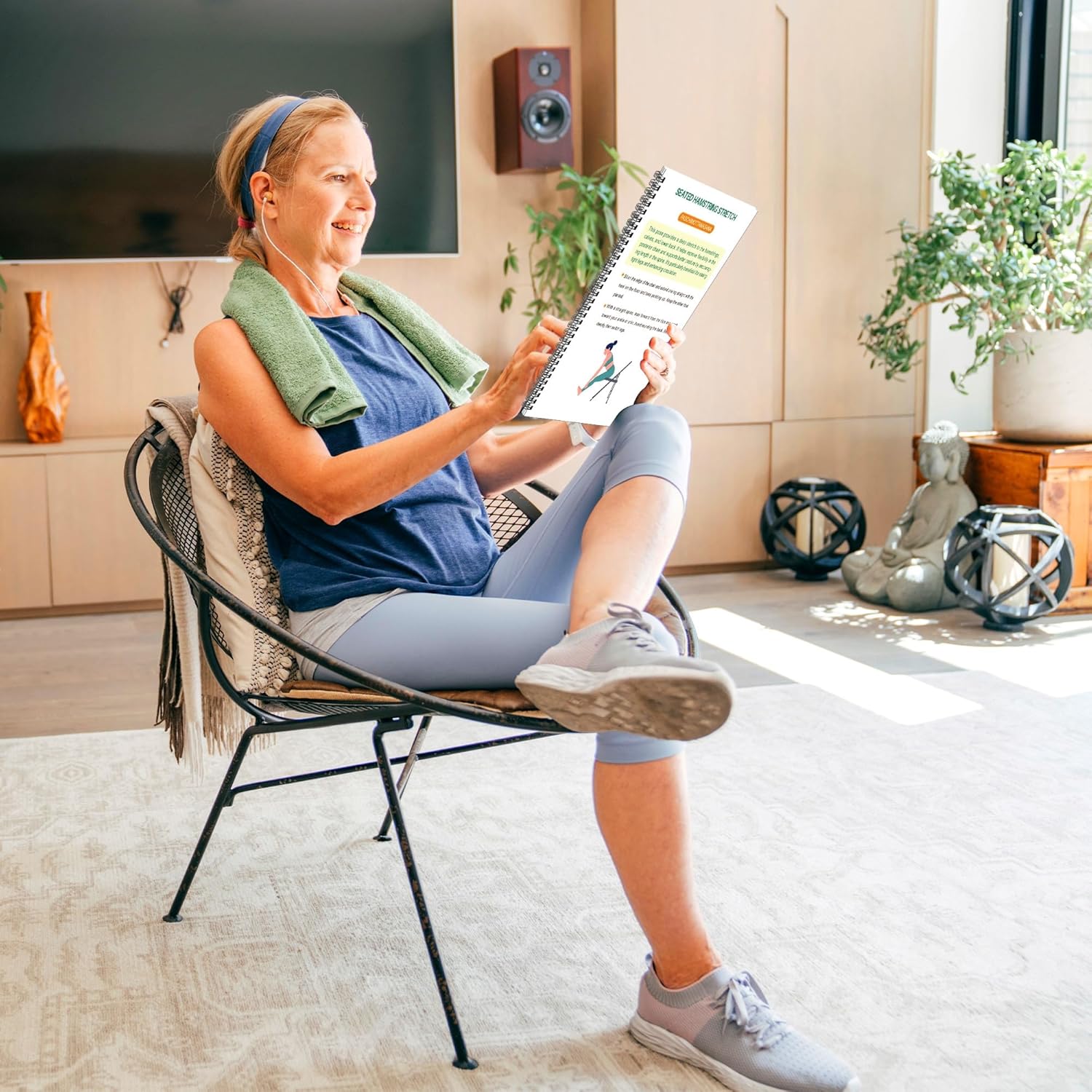 |
A Book & Chart (8.5 x 11) with 18 easy seated yoga poses with clear instructions, benefits, and senior-friendly modifications. |
| Tai Chi for Seniors: The Complete 10-Min-a-Day Workout | |
 |
Build better balance, reduce stiffness, and move with confidence in 10 minutes a day for senior adults |