

Stop Financial Scams Targeting Seniors: What to Say and Do
The phone rings at 10:15 on a Tuesday morning. The screen shows your bank's name.
"Good morning, this is Daniel with the fraud department. We've flagged two charges on your account, and I want to make sure they aren't yours."
He's polite. He knows your name. He even knows the last four digits of your debit card. Nothing about him sounds like a crook, and that's exactly why he's good at his job.
Three different people answer that same call this morning. They hear the same caller, the same script, and the same pressure. One of them loses most of her savings. One nearly does. One is back to her crossword in under a minute.
The difference isn't intelligence. It's what each of them does next. First, though, it helps to know why scammers target seniors so often.

Why do seniors get scammed so easily?
Mostly because scammers go where the money and the trust are. Financial scams targeting seniors work because older adults often have savings, good credit, and the manners to stay on the line with a polite stranger. Many live alone, grew up answering every call, and came to online banking later in life. Scammers count on those habits, and on reaching you when your guard is down.
The money they're after is real. In 2025, Americans 60 and older reported losing $7.7 billion to fraud, about 60 percent more than the year before. And that only counts the people who spoke up. Many never do because they're embarrassed, and fewer reports mean fewer investigations. That's exactly how scammers keep getting away with it.
Here's a twist most people don't expect. According to the Federal Trade Commission (FTC), younger adults actually report losing money to fraud more often. But when older adults lose, they lose more. For people 80 and older, the typical reported loss tops $1,600. On a fixed income, there's no next paycheck to soak up the damage.
One Call, Three Endings
Here's how that call from "Daniel" plays out in three different kitchens. The names are invented, but the script is one of the most common financial scams targeting seniors.
Carol Goes Along
Carol is 72. She kept the books for her church for 25 years without losing a penny. She isn't careless. She's tired. Her husband had a heart test yesterday, and she slept about four hours.
When Daniel says someone in Ohio is trying to empty her savings, her stomach drops. He says the bank will text her a code to confirm her identity. Her phone buzzes right on cue, and she reads him the six digits.
What Carol can't see is Daniel typing her password into her bank's website at that very moment. He bought it from other crooks online after a store she shopped at years ago got hacked. When he tried to log in, the bank texted a security code to Carol's phone to make sure it was really her. By reading it aloud, she just let him in.
Next, Daniel says the thief is still trying to break in. He needs one more code to "lock down" her account. Her phone buzzes again, and she reads it to him. That second code approves a transfer Daniel has just set up, moving her savings to an account he controls.
He keeps her chatting so she won't notice the text her bank sends about the transfer. Before he hangs up, he warns her not to mention any of this at her bank branch, because "we think someone inside is involved."
By lunch, $41,000 is gone.
Carol doesn't tell her daughter for three weeks. She's ashamed, and she's sure it's too late to matter. That silence is exactly what Daniel was counting on.
Walt Asks Questions
Walt is 78, a retired engineer, and naturally suspicious. He asks for Daniel's employee number. Daniel rattles one off. Walt asks why the screen shows his bank's name. "That's our fraud line, sir."
Walt asks to call back. Daniel doesn't miss a beat. "If we disconnect, the hold drops and those charges go through. I can't let that happen to you."
Every question gets a smooth answer, and every answer makes the next question harder. Walt has already confirmed his birth date "for verification" before he catches himself. His head is spinning.
Then Daniel says the bank is texting Walt a code to confirm his identity and asks him to read it back. Walt's phone buzzes, and he stops. He's read phone codes to his bank before, but only when he called them. This time, the "bank" called him.
"I'm going to call you back on the number on my card," Walt says.
Daniel's voice changes. "Sir, if you hang up now, you'll be responsible for any losses."
That's the moment Walt knows. He ends the call and dials his bank. There are no flagged charges. The bank resets his login, just to be safe, and Walt keeps every dollar.
He spends the rest of the day rattled, though. Every minute on the line gave Daniel another chance to steer. In the end, Walt's smartest move wasn't a question. It was hanging up.

Bev Hangs Up
Bev is 75. Daniel gets as far as "We've flagged two charges" before Bev cuts in.
"Then I'll call the number on my card."
She clicks off, blocks the number, and calls her bank. Nothing is wrong with her account. She's back to her crossword before her coffee gets cold.
Bev isn't smarter than Carol or Walt. She just has one rule she never argues with. Any call about her money gets hung up, then called back.
Two months later, her bank calls about a strange charge. Bev ends the call anyway and dials the number on the back of her debit card. This time it's real. The fraud team cancels the card and mails her a new one. Checking cost her four minutes, and she lost nothing by doing it.
Bev will be the first to tell you she isn't immune. On a tired morning, she could slip too. That's why her rule doesn't depend on how sharp she feels that day.
What Made the Difference
All three heard the same friendly voice. Carol let the caller control every next step. Walt fought for control and nearly lost it. Bev took it back in 10 seconds.
You don't have to win the argument or prove it's a scam. You only have to end the call.
What Are the Four Common Scams Targeting Seniors?
Scams come in hundreds of costumes, but four show up again and again: grandparent, government impersonation, tech support, and romance. All four are imposter scams in which a crook pretends to be someone you trust, like a relative, a government agency, a big company, or a new friend. Here's how to spot each one, and what to do about it.
1. The grandparent scam. "Grandma, it's me. Please don't tell Mom." The caller claims to be your grandchild, in jail or in a wreck, and needing money now. Then a "lawyer" calls, or a "courier" comes to your door to collect the funds.
The voice is what sells it. With artificial intelligence, scammers can copy a real voice from a short online video, so it can sound just like your grandchild.
➤ Do this: Hang up and call your grandchild, or their parents, on a number you already have. Better yet, agree on a family code word ahead of time. If a panicked "grandchild" can't give it, you'll know the voice isn't really theirs.
2. Government impersonation scam. A male caller says he's from the Internal Revenue Service. Your caller ID may even show the agency's real phone number. He says you haven't paid your taxes, and there's a warrant for your arrest unless you pay today.
Other imposters change the story. One says he's with Social Security and your benefits will stop. Another claims your Medicare coverage will end. A third poses as a sheriff's deputy and says you missed jury duty. But the demand never changes. Pay now, by wire transfer, gift cards, or cash handed to a "courier" at your door. All three are nearly impossible to trace.
➤ Do this: End the call. Real government agencies never threaten arrest or demand payment over the phone. If you're worried the call might be real, look up the agency's phone number on its official website and call it yourself.
3. Tech support scam. A warning box suddenly fills your screen and won't close. It says your computer has a dangerous virus. To look official, it uses a name you trust, like Microsoft on a computer that has Windows installed. It lists a phone number and tells you to call right away.
The man who answers offers to fix it, but first he needs to connect to your computer. He walks you through downloading a program and clicking "Allow," which lets him control your screen remotely. He "finds" problems and charges $299 to fix them. To pay, you sign in to your bank while he's still connected. Now he can see your accounts and move your money himself.
➤ Do this: Don't call. Real companies never put a phone number in a warning box. If your screen freezes, restart the computer. Never download a program or click "Allow" for a stranger, and never sign in to your bank while anyone is connected. For real help, call the store where you bought it or a repair shop you trust.

4. Romance and friendship scams. A text arrives from a stranger: "Hi Susan, are we still on for lunch Tuesday?" You kindly reply that they have the wrong number. They apologize, thank you for being kind, and keep chatting. Soon you're trading messages every morning. They ask about your day, send photos, and remember your grandkids' names. It starts to feel like a real friendship, maybe even a budding romance.
Weeks later comes the ask. Your new friend has a medical emergency and needs money, or has made a fortune investing and wants to help you get in. Investment scams like these cost older adults more money than any other kind. Romance scammers find people the same way on dating sites and social media.
➤ Do this: Never send money to someone you haven't met in person. Before any investment, talk it over with someone who isn't part of the conversation. Saying no can feel unkind, but you can care about someone without paying for their emergency. A real friend will understand.
What Are Some New Scams Targeting Seniors?
The tricks keep changing, but the goal is always to steal your money. Here are three newer ones to watch for.
- Digital arrest. A fake police officer calls and says you're tied to a crime. He insists you join a video call using an application like WhatsApp. He shows a badge and a fake arrest warrant on screen. Then he keeps you on camera for hours, warning you'll be arrested if you hang up, until you agree to pay a "fine." Real police never do this. End the video call.
- Cryptocurrency machines. A caller posing as your bank warns that hackers are in your account. To protect your savings, he says, withdraw cash from your bank today and put it into a Bitcoin machine at a gas station. The machine turns cash into digital money, called cryptocurrency. He texts you a code. Scanning it at the machine sends your money to him. No real bank asks for this. Hang up.
- Fake toll texts. A text pops up on your phone: "You owe $4.85 in unpaid tolls. Pay today to avoid a $50 late fee." A payment link follows, which opens a fake page that steals your card number. Don't tap the link. If you're unsure, check your toll account yourself.
What Does a Scammer Need to Get Into Your Bank Account?
Less than you'd think. Scammers usually reach your money in one of three ways, and you've already seen each one in action.
The first is your login plus a security code. Your login is the username and password you use to sign in to your bank online. Stolen passwords are sold online by the thousands, so a scammer may already have yours. What he can't get without you is the code your bank texts to make sure it's really you. That's why Daniel needed Carol to read hers to him.
The second is control of your computer. That's the tech support scam. Once you click "Allow," the fake technician can watch you sign in to your bank, get your account information, and then empty your accounts.
The third, and hardest to undo, is you. The scammer talks you into moving the money yourself, by wire, through a Bitcoin machine, or in cash handed to a "courier." He never needs your password. Since you made the withdrawal, the bank sees nothing wrong, and the money is much harder to get back.

What Bank Information Should You Never Give Out?
If someone calls you and asks you to "confirm" any of the details below, it's a scammer fishing for a way into your account. A real bank won't call and ask for them. Keep these to yourself:
- Online banking username or password
- Personal identification number (PIN) for your debit card
- One-time security codes sent to your phone or email
- Full card number, expiration date, or the three-digit code on the back
- Bank account number and routing number
- Social Security number
- Answers to your security questions
What Should You Never Say to a Scammer?
On a call you didn't make, a few words can empty your account. Never say these:
- "Here's the code." Reading a code to a caller can give them access to your whole account.
- "Yes, that's right." Don't confirm your address, birth date, or any part of your Social Security number. Each "yes" helps a scammer pretend to be you, which is why Walt's slip mattered.
- "Okay, I won't tell anyone." Only a scammer asks you to keep a call secret. Daniel warned Carol not to mention the call at her branch, because the bank could have stopped him.
- "I'll pay" or "Let me think about it." Anything short of no makes a scammer push harder.
What you can say is simple, and it works on every scam above:
"I don't handle money on calls I didn't make. I'll call back on a number I look up myself."
Then hang up. You don't owe an explanation, and you don't need to be polite to someone who's trying to rob you.
The Financial Scam Safety Check
You don't have to investigate every call, text, and email that comes your way. Most are harmless. Only the ones that ask you to move money, read a code, or hand over personal details need a closer look. For those, ask yourself these five questions before you act.
- Am I being rushed, frightened, or told to keep this secret? Rushing keeps you from thinking clearly, and secrecy keeps away anyone who could stop the scam.
- Am I being asked to move money or share private information? Every scam ends with this request, whether the story is about a hacker, a warrant, or a grandchild in trouble.
- Have I ended the call instead of following the caller's instructions? If the call was real, your bank will still be there when you call back.
- Have I verified the story using contact information I found myself? Use the number on the back of your bank card, your statement, or the official website. Never use a number from the caller, a text, an email, or a warning box on your computer. Caller ID can be faked in seconds, so don't trust it either.
- If I shared information or sent money, have I contacted my bank? The sooner your bank knows, the better its chance of stopping the money before it's gone. Deal with the embarrassment later, or better yet, not at all.
Notice the pattern. The first two questions spot a scam. The last three keep it from costing you.
Take this seriously. It's your life savings on the line. Scammers want to catch you rattled, and nobody remembers five questions with a smooth-talking stranger in their ear. Keep the Safety Check by your phone, and have it in front of you whenever an unknown caller brings up money.
Save or print the Safety Check below. On a smartphone, tap the image to enlarge it.

Don't Make Yourself a Target
Everybody seems to have a different rule. Don't answer unknown numbers. Answer them, or you'll miss the doctor. Never click anything. Always check everything. No wonder people feel worn out before the phone even rings.
You only need one rule: before you do anything, check any call or message about your money on a number you trust. Everything below just backs it up.
- Let unknown numbers go to voicemail. It takes no setup, and it settles the "what if it's my doctor?" worry. Real offices leave a clear message. Scammers usually don't. Listen first, then call back on a number you look up yourself.
- Name a trusted contact at your bank and investment firm. This is someone you choose, like an adult child or close friend, whom the bank can call if something looks wrong. They can't touch your money. It takes one phone call to set up, and investment firms must ask you for one.
- Turn on account alerts. You pick an amount, say $100, and your bank texts you whenever more than that leaves your account. If a scammer moves money, you'll know in minutes, not weeks. Call your bank or ask a teller to set it up for you.
- Get to know a teller or banker. If you suddenly ask for a large amount of cash, someone who knows you is more likely to ask why. That one question has stopped plenty of scams.
Protecting your money from thieves works best alongside a few everyday money habits, like knowing what comes in and checking your statements each month. Those are covered here:
>>Related: Financial Fitness for Older Adults
Simple Tools That Back Up Your One Rule
A few inexpensive tools make your one rule easier to follow, especially when the phone won't quit.
✧ Call Blocker
This small box plugs in between your landline and the wall jack and stops many scam calls before the phone ever rings.
✧ Call Log Notebook
Keep one beside the phone. Jot down the date, number, and story of every suspicious call. You'll spot a con when it comes back and have the details ready if you report it.
✧ Large-Print Address and Phone Book
Write down the numbers you've checked yourself, like your bank, your credit card company, and your family. When a caller says there's trouble, you can look up the real number in seconds and call it yourself.
✧ Cross-Cut Shredder
Old statements and credit card offers tell a thief too much. A shredder turns them into confetti before anyone can pull them from your trash.
✧ Video Doorbell
See and talk to whoever is at the door without opening it. If a "courier" shows up to collect money, you can say no from the couch.
None of these tools spot a scam for you. They just make it easier to slow down and say no.
What Should You Do If You've Been Scammed?
First, take a breath. Being scammed doesn't make you foolish. Professionals build these schemes to hijack normal reactions like worry, trust, and the urge to protect your family. Now act fast, in this order.
1. Call your bank or credit card company right away. Use the number on the back of your card. If the words won't come, start with this: "I've been the victim of a scam. I need to stop a payment and secure my account." Then ask them to lock the card and reset your login.
If you paid with a gift card, call the company named on the card and keep the card and receipt. For a wire transfer, call the company you used to send it, like Western Union. For a Bitcoin machine, call the number printed on the machine or your receipt.
2. Lock down your accounts. Change any password you shared, and change it everywhere else you used it. If a stranger had control of your computer, unplug it from the internet and have a local repair shop check it. If you gave out your Social Security number, go to IdentityTheft.gov for a step-by-step recovery plan.
3. Report it. File reports at ReportFraud.ftc.gov and with the Federal Bureau of Investigation (FBI) Internet Crime Complaint Center at IC3.gov. If a courier came to your door, call your local police too. For free, confidential support, call the AARP Fraud Watch Network Helpline at 877-908-3360.
4. Tell someone you trust. Carol carried her secret alone for three weeks, and it only got heavier. A friend or family member can help you make the calls and keep track of the details. Shame helps nobody but the scammer.
5. Watch for the second wave. Soon after a scam, someone may call offering to recover what you lost. They may claim to be a lawyer, a recovery firm, or even the FBI. It's another scam, often run by the same people who robbed you. Government agencies never charge for this, and anyone who wants an upfront fee is a scammer.

Getting Help Without Giving Up Control
Sometimes you just want a second opinion on a strange email or a charge you don't recognize. But asking for help can feel like handing someone the keys to everything. It doesn't have to. Here's how to get help and still keep control:
- Show the message, not the password. Let someone you trust look at the email or text. Nobody helping you needs your login or your codes.
- Ask your bank in person. Walk into the branch with the suspicious letter, email, or text in hand. A teller can check whether it's real. You'll show your ID, but you won't need to give out a password or code.
- Offer view-only access. Many banks let a family member see your accounts without being able to move money. They can spot trouble, and you keep control.
Not every threat comes from a stranger. When a relative, caregiver, or new friend pressures you to sign papers or keeps you from other family, that's elder financial abuse. If that sounds familiar, call the Eldercare Locator at 1-800-677-1116. It can connect you with Adult Protective Services in your area.
Frequently Asked Questions
1. What age range gets scammed the most?
It depends on how you count. Adults under 60 report losing money more often, but people 80 and older lose the most each time.
2. What will scare a scammer?
Nothing rattles a scammer like a hang-up followed by a call to your bank. These imposters need you on the line, rushed and alone. The moment you end the call and check the story yourself, their plan falls apart. No threats or lectures required.
3. What should you never open in spam emails?
Never open attachments or click links in an email you weren't expecting, even if it carries your bank's logo. Logos are easy to copy. Don't reply either, since that tells the scammer your address works. If a message claims a problem with your account, call the number on the back of your bank card.
4. Can you get your money back after a scam?
Sometimes, and speed matters most. Credit card charges are the easiest to dispute. Bank transfers and gift cards are harder, and cryptocurrency and cash are rarely recovered. Call your bank or credit card company the moment you realize what happened.
5. How can I tell if a parent is being scammed, and how can I help?
Watch for secretive phone calls, a new online "friend" they won't talk about, gift card receipts lying around, or unusual withdrawals. If you spot trouble, don't argue, since scammers often warn victims not to trust family. Share stories like Carol's instead, so it never feels like a lecture. Then suggest visiting the bank together, so a neutral voice can weigh in.
Final Thoughts
Carol finally told her daughter. Her bank couldn't recover the money, but it shut Daniel out of her account and helped her file the reports. Her daughter sat with her while they turned on account alerts and named a trusted contact at the bank. Now when her bank's name shows up on the screen, Carol lets it ring, then calls the number on the back of her debit card.
Financial scams targeting seniors will keep changing shape. Scammers will borrow new voices, new badges, and new emergencies. What they can't get around is a person who ends the call and checks for themselves.
You don't need to spot every scam. You just need one rule you'll follow even on a tired morning: hang up, and call back on a number you trust. Your money stays yours, and so does your peace of mind.
Not sure where to begin? Take a look at the suggestions below.
Recommended Products
As an Amazon Associate, I earn from qualifying purchases.
| Panasonic Call Blocker for Landline Phones | |
 |
Connect to landline cordless phones to block robocalls, unknown international callers, and other callers; ideal for phones without call blocking. |
| Vertical Phone Call Log Notepad | |
 |
This call log notepad has 80 sheets. It is compact, portable, durable, and ideal for work, office, and home. |
| Comkiso Address Book with Individual Alphabetical Tabs | |
 |
This large-print hardcover address book is 5.7 x 8.5" and has 468 wide lining entry spaces and change of address labels. |
| Amazon Basics 12-Sheet Cross-Cut Paper and Credit Card Shredder | |
 |
This cross-cut shredder cuts material into approximately 0.2 x 1.2 inches and shreds up to 12 sheets of 20-pound bond paper at a time. |
| BOIFUN Wireless Video Doorbell Camera | |
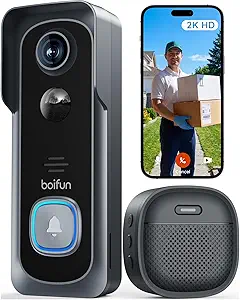 |
This video doorbell covers your front porch with no blind spots. The video delivers moderate depth of field with crisp facial details for fast visitor recognition. |
0 Responses to “ Stop Financial Scams Targeting Seniors: What to Say and Do”: